You send a proposal on Tuesday afternoon. The client opens it twice that night, forwards it to a colleague, and then the thread goes quiet. A week later you are checking your phone on the train, wondering whether to nudge, what to say, and whether a nudge makes you look desperate. Is the deal still alive, or is it dying quietly?
Most of the time the deal is still alive. What is dying is the follow-up, and proposal follow up automation is what keeps it moving. Cold email software maker Instantly reports that high-performing teams close between 45 and 50 percent of qualified buyers at the proposal stage, while the broader industry range sits between 25 and 50 percent. The gap between those numbers usually opens in the days after you send the proposal, and that is exactly where the automation works.
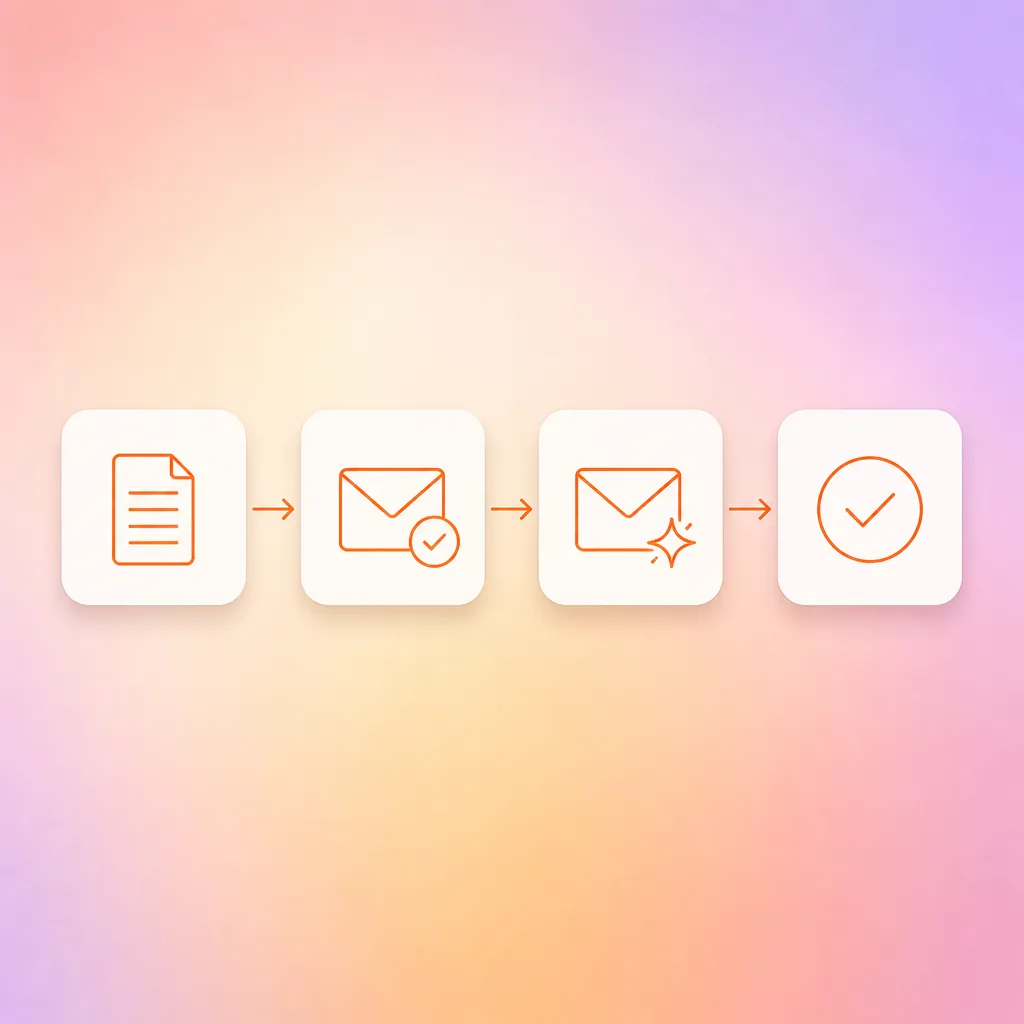
Proposal follow up automation is an AI system that watches what happens after your proposal lands, decides which message should go next, and writes each follow-up around the specifics of that deal. You send the proposal. The system handles the remembering, the pacing and the personalising. By day ten you know whether the deal is alive, and so does the client.
Why proposals go quiet after you send them
The client is busy, the proposal is long, and nobody has scheduled what happens next. Document and proposal software maker PandaDoc, drawing on nearly seven million documents sent through its platform, puts the average proposal at around nine pages. A nine-page document arrives into an inbox that already has forty other demands on it, and the buyer needs a reason to come back to it.
That reason is a follow-up, and most sellers never send enough of them. B2B lead generation agency Martal Group, citing ProfitOutreach data, says 92 percent of reps quit after four attempts or fewer, and sales engagement platform Yesware found only 2 percent of sales happen at the first point of contact. Proposal software maker Qwilr relays Outreach data showing it takes an average of 4.81 touches to get a response, regardless of whether the lead is warm or cold.
The benchmark for what is possible at the proposal stage comes from proposal software company Proposify. Its 2025 State of Proposals report, built on 902,305 proposals sent through the platform, found the industry average close rate for sales sits around 20 percent, while Proposify users average 36 percent. Proposify credits that gap to better proposal practice as a whole and does not split out follow-up, so treat 36 percent as a ceiling for what tighter proposal handling can reach, with follow-up as one part of it.
What proposal follow up automation actually sends
The sequence runs for ten days and three messages, spaced so each one lands after the previous one has had time to work. Cold email software maker Instantly recommends a first follow-up on day two or three, a value-add on day seven, a pivot on day fourteen and a close-out around day twenty-one, with every email adding something new rather than just checking in. The exact days matter less than the spacing. Sales proposal software cobl, citing Martal Group data, found a two-to-three-day delay between unsolicited follow-ups increases reply rates by 11 percent.
| When | What the message does | Branch if there is no reply |
|---|---|---|
| Day two | Confirms the proposal arrived and asks one direct question about it. | No open after 48 hours fires a separate nudge, because the email probably never surfaced. |
| Day five | Adds something the proposal did not cover: a short case study, an answer to a discovery question, a plain walkthrough of the pricing. | A personalised subject line earns the second look. |
| Day ten | Names the two paths, start next week or stop here, so the client can close the loop either way. | Silence past day ten is the answer, and the deal moves to closed-lost. |
Confirm it arrived and ask one question
The first message is a receipt check with a single direct question, something like whether the pricing section matches what they expected. Proposal software maker Qwilr calls this layer the "making sure this got to you" email, and it works even when you know they opened it. If the proposal has not been opened after 48 hours, a different branch of the automation fires. AI automation agency WorksBuddy recommends a gentle nudge when there is no open after 48 hours, because silence at this stage usually means the email never surfaced.
Add something the proposal did not cover
The second message earns another look by adding value. CRM vendor HubSpot's guidance is that most responses to cold and warm outreach come after the first follow-up, and every follow-up should add a case study, a relevant resource or a direct question instead of restating the pitch. A short case study that mirrors the client's situation, a one-paragraph answer to a question they raised in the discovery call, or a plain-language walkthrough of the pricing page all work. Personalised subject lines help here. Martal Group reports they lift open rates by up to 50 percent.
Close the loop with a clear choice
The final message gives the client an easy way forward and an easy way out. It names the two paths so the choice is simple. Either we start next week, or this one is not the right fit and we both stop spending time on it. Instantly's research on proposal follow-up sequences shows the later touches should surface hidden objections and pivot the angle, which a clear either-or question does naturally. By day ten the sequence has produced an answer, one way or the other.
Engagement triggers make the sequence smarter than a static drip. A trigger is the event that starts a message, like an open, a click or a reply. If the prospect opens the proposal three times in 24 hours, that is a strong buying signal, and the automation should alert you immediately, without waiting for the next scheduled send. WorksBuddy recommends exactly this behaviour-based alert for multiple opens in a day, and sales engagement platform Yesware describes the same pattern, where opened-but-no-reply within three days triggers a reminder while interest is still high. That is the moment to pick up the phone.
What to write so it never sounds automated
The fastest way to kill a deal is a follow-up that reads like a robot wrote it. Keep every message short, specific and recognisably yours. Martal Group, citing Yesware's analysis, reports that emails between 50 and 125 words outperform longer messages, which is roughly three short paragraphs or two and a half sentences per paragraph. If a message takes longer to read than the proposal page it links to, it is too long.
Write the three emails once, in your own voice, with the specific deal slotted in. Marketing automation software maker ActiveCampaign defines the mechanics. Every automation workflow runs on a trigger, a set of actions and conditions that branch the path, and the personalisation should be strong enough that a recipient cannot tell whether a human pressed send. That is the test. If the client would reply to your day-five email as if it came from you, the automation is doing its job.
Triggered messages outperform one-off sends on the numbers too. Email marketing platform GetResponse, analysing 4.4 billion messages, found triggered emails open at 45.38 percent versus 40.08 percent for newsletters, and click-through follows the same pattern. Email testing and analytics company Litmus adds that advanced AI adopters are 75 percent more likely to achieve email ROI above 45 to 1. The automation saves you time, and it sends better-timed messages than a busy person ever will.
Which quoted deals deserve the sequence and which do not
Proposal software maker Better Proposals draws the line that matters. A proposal sells the thinking, while a quote confirms the pricing. The more thinking your document contains, the more it deserves the full follow-up sequence. A one-line price for a standard service gets a single follow-up and then a clean close. A consultative proposal, scoped work, or a document the client has to socialise internally gets all three touches, because that is where the win rate moves.
cobl's proposal research supports the same split, reporting that fully customised proposals win at 50 to 65 percent versus 15 to 25 percent for rigid templates. The customised end of your pipeline is where follow-up effort pays for itself, and it is also where the buying committee gets involved. When several stakeholders need to weigh in, the sequence becomes the glue that keeps the deal moving while the internal conversation happens.
The connector path matters as much as the messages. Proposal tools like Proposify, PandaDoc and Qwilr all pass deal data to email platforms such as ActiveCampaign, Klaviyo, Brevo or Customer.io through native integrations and webhooks (an automatic handshake where one tool tells another an event happened), so the sequence can start the moment the proposal goes out without anyone copying an address. Marketing automation platform Klaviyo documents the same building blocks in its best practice guide for automated flows, and the pattern is consistent. A trigger starts it, a message follows, and a conditional split decides what happens next. The least-friction setup is the one where the proposal tool owns the document and the email platform owns the timing.
This is where a proposal follow-up sequence connects to the rest of your pipeline. The deals that reach proposal stage should already have been qualified, and if your team is chasing quotes for prospects who were never a fit, the fix belongs earlier in the funnel. Our guide to building a lead qualification agent covers that upstream step, and our AI email nurture sequence walkthrough shows the same trigger-and-branch mechanics applied to leads that are not ready to buy yet.
What to measure: reply rate, meeting rate and won rate
Three numbers tell you whether the sequence is working. Reply rate comes first, and it is the only engagement signal you can fully trust. Instantly notes that Apple Mail Privacy Protection inflates open rates, which makes reply rate the first real signal, and warm-lead proposal reply rates should run between 5 and 10 percent, with anything below 3 percent flagging a problem with the offer, the price or the fit.
Meeting rate tracks how many replies turn into a conversation about next steps, and won rate tracks how many of those conversations turn into signed work. Proposal software company Proposify's State of Proposals 2026, built on 742,137 real proposals across 30 industries, exists precisely to show which signals predict a won, lost or ghosted deal, and reply timing is one of them. WorksBuddy adds a practical diagnostic. If days-to-signature runs past seven, the cadence is too passive and the sequence needs to move faster or add a stakeholder.
Watch the shape of the numbers, not just the level. If reply rate is healthy but won rate stays flat, the proposal itself is the bottleneck, and the fix is in the document. If reply rate is low, the emails need work. The automation makes the diagnosis possible because it removes the inconsistency of human follow-up from the equation.
What you'll need: an email platform, a proposal link and 30 minutes
You do not need a developer for this. The pieces are tools your team probably already pays for. An email platform with automation workflows, which means ActiveCampaign, Klaviyo, Mailchimp, Customer.io or any equivalent that lets you set a trigger, a delay and a branch. A proposal link that tracks opens, which means Proposify, PandaDoc, Qwilr or a document tool with view tracking. Half an hour to write the three emails once. And a CRM or a simple spreadsheet to log replies and outcomes.
If you are new to the workflow concept, marketing automation software maker ActiveCampaign defines an email workflow as a series of automated emails triggered by specific subscriber actions or behaviours. For a proposal sequence, the trigger is simple. A deal moves to proposal sent, the three messages follow with two-day and three-day delays between them, and the conditions handle the branches, like skipping the day-five email when the client replied to day two.
Start with the proposals you have out right now
You can test the whole approach this week without rebuilding anything. Pick the ten most recent proposals that went quiet and list them in your CRM. Write the three emails once, tailored to your voice and your services. Turn on a basic workflow in your email platform with the proposal sent date as the trigger. Then let the numbers tell you whether to keep going.
The business case writes itself if you put numbers on it. Say you send ten proposals a month at an average value of AUD 10,000 and close two, which is AUD 20,000 of won work a month at the industry average close rate of around 20 percent. Moving from 20 to 25 percent, a shift well within what follow-up-driven teams report at the proposal stage, adds AUD 5,000 a month on the same ten proposals. Over a year of ten proposals a month, that is AUD 60,000 of extra won work for a couple of hours of setup time. Run the same sum with your own proposal volume, deal value and close rate before you trust ours.
This is something we do at Supernodes. Two-week pilot: audit the proposals sitting in your pipeline, connect the sequence to the tools you already use, and measure reply rate. Speak with us if it sounds like your Tuesday morning. And if you are weighing whether to build the workflow yourself or buy a platform, our build versus buy cost breakdown for marketing automation gives you the real numbers for that decision.
Frequently asked questions
How long does proposal follow-up automation take to set up?
The foundation can be live in two weeks. The Supernodes pilot covers audit, connect, deploy and measure.
What is the best cadence for proposal follow-up emails?
Three touches at day two, day five and day ten works for most B2B deals. Sales engagement platform Yesware found the most successful cadence in 10 million email threads was six touches over roughly three weeks, spaced three to four days apart. The principle that holds across both patterns is spacing of two to three days between messages.
Will automated follow-ups make me look pushy?
No, if every email adds something new. CRM vendor HubSpot reports most responses to cold and warm outreach arrive after the first follow-up, and a value-add message reads as helpful, which is the kind of message people reply to.
What reply rate should I expect from proposal follow-up emails?
Between 5 and 10 percent on warm leads. Cold email software maker Instantly says anything below 3 percent signals a problem with the offer, the price or the fit.
Should every quote get the full follow-up sequence?
No. Commodity quotes get one follow-up and then a clean close. Consultative proposals get the full sequence, because sales proposal software cobl reports customised proposals win at 50 to 65 percent versus 15 to 25 percent for rigid templates.
What if the client opens the proposal but never replies?
That is the most common case, and it is what the sequence is for. AI automation agency WorksBuddy recommends alerting the rep when a prospect opens the proposal three times in 24 hours, because that signals buying intent, and a phone call in that window lands far better than another email.